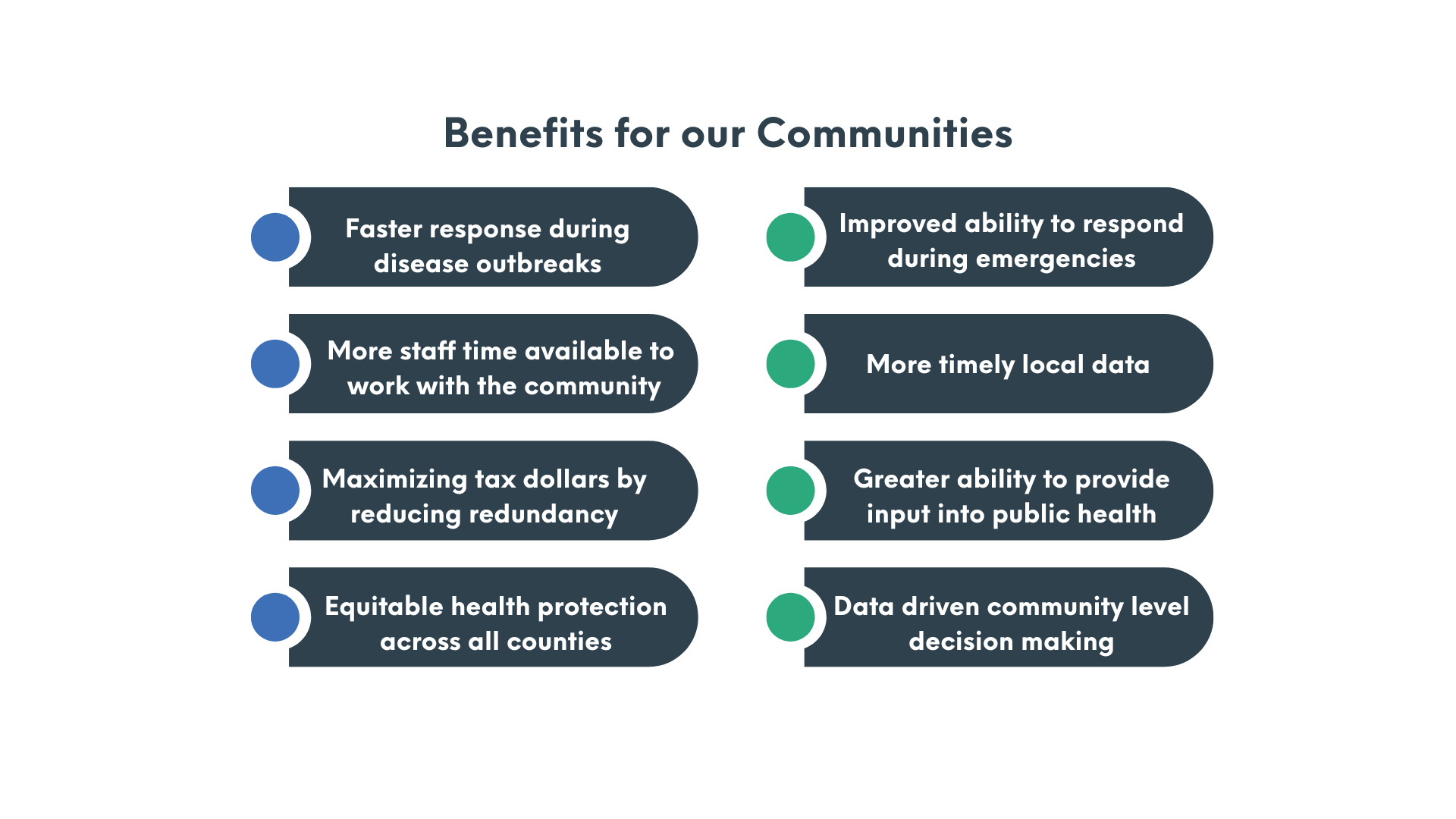
Public health departments across Minnesota handle data work every day, but they don't all have the same resources. The problem is that some departments have trained staff and great technology while others are struggling with limited help. Metro areas might have whole teams of data experts and the latest data software, but rural counties often have just one person trying to handle all the data as well as other responsibilities. This creates a big problem for our communities. When a health department can't properly analyze data, they can miss early warning signs of disease outbreaks, and they can't target prevention programs where they're needed most. Some communities get great health protection while others are left behind. Poor data work means more expensive emergency responses later. Good data collection and analysis help health departments stop disease outbreaks quickly and direct funding to the areas where it will help the most people in your community. Investing in better data capacity for all Minnesota health departments means better protection for everyone and lower healthcare costs in the long run.
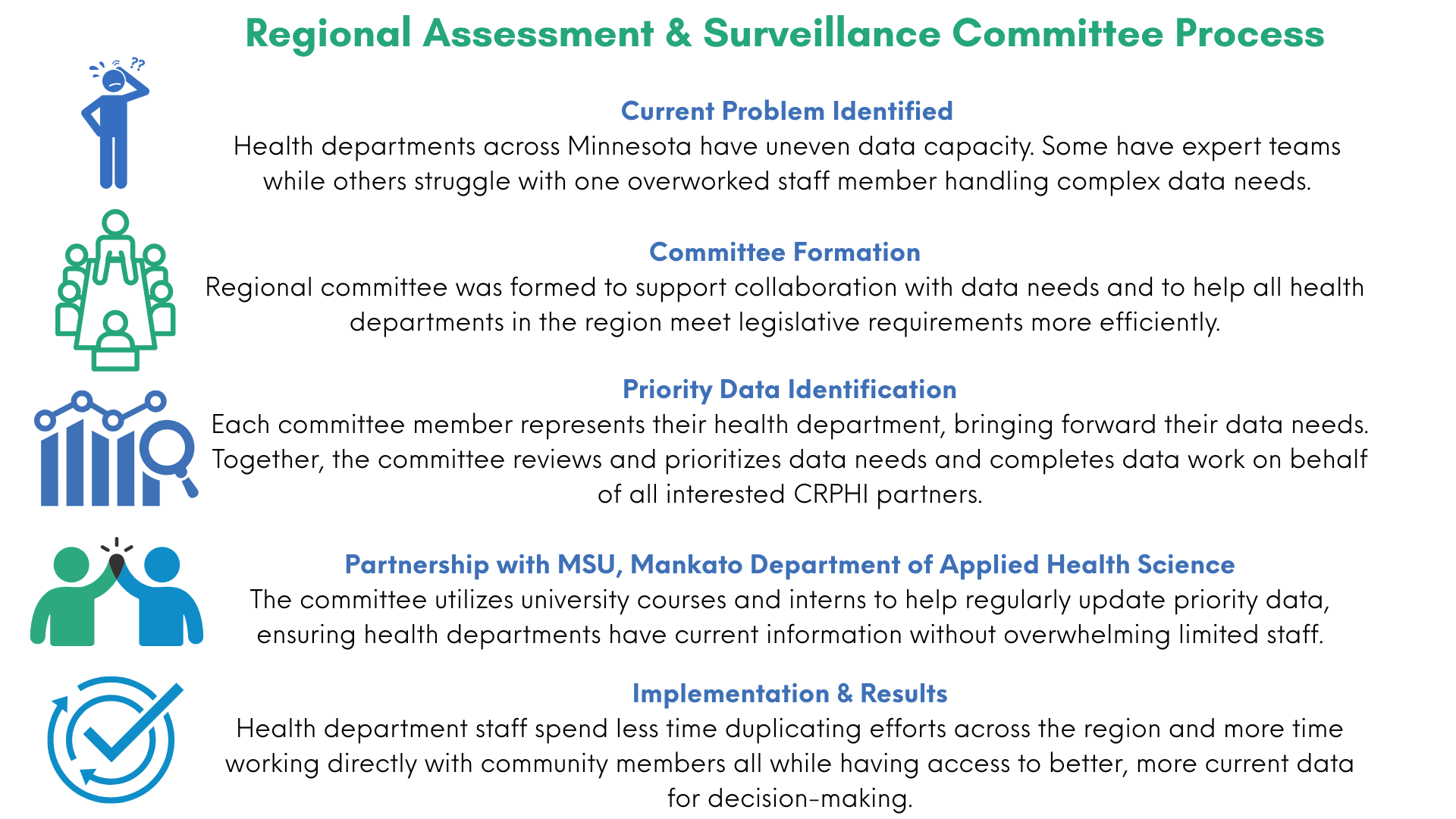
As a result of the varied capacity levels across our region surrounding data, CRPHI developed the Assessment & Surveillance Committee. The committee includes representatives from each CRPHI health department that work to collect, analyze and interpret data. By meeting with colleagues across our region the Committee can share best practices, identify existing resources of data and share information and skills with one another to ensure staff are able to gain help and skills. We’re partnered with Minnesota State University, Mankato faculty and students by working with classrooms to collect data on behalf of each health department. Having students and faculty assist in data collection provides the next generation with real life exercises while being able to save time for staff in our local health departments.
Assessment & Surveillance Committee Goals
Strengthen Community Health Assessment and Surveillance
By Minnesota statute, Community Health Board's must complete a Community Health Assessment every five years. This process typically involves lengthy surveys and collecting data from many sources before sharing the data back with the community to identify the highest areas of need. Through interns we have analyzed all the Adult Health Surveys sent out from each CHB from 2016 until their most recent to see what indicators are being collected. The Committee took this information to identify what pieces are crucial to collect directly from the County during that moment in time versus what data can be used to support it from other sources.
The goal of this project is to develop a unified community health assessment process that helps every health department fulfill their legislative requirements while making the work more efficient. The committee is working to identify the most important data indicators that health departments need to make well-informed decisions, which will allow for shorter surveys and give staff more time to work directly with community members. By utilizing MSU Mankato courses and interns to help regularly update this priority data, health departments will have access to current information without overwhelming their limited staff resources, ensuring they can focus on what matters most for their communities.
Identify Regional Data Tracking Infrastructure
We need to map out what technology and systems each health department currently uses to collect and share health information. Many departments are using outdated software or can't easily share data with neighboring counties. By identifying gaps in our current systems, we can build a connected network where health departments can quickly share important information during emergencies. This means faster responses to disease outbreaks and better coordination when health threats affect multiple communities and provides an ability for community members to see data that the county collects.
Strengthen Community Health Assessment & Plan Implementation
After communities identify their health problems through assessments (CHA), they create action plans called Community Health Improvement Plans (CHIP). These plans outline specific steps to address local health issues. Many communities struggle to turn their plans into real action because they lack staff or resources. We want to help communities implement their improvement plans so they see real results - like lower disease rates, fewer emergency room visits, and healthier residents. This will be done through continued discussions and sharing of resources, best practices, and evaluation methodology from members.
Enhance Data Collection and Partnership Development
Good health data comes from working with many different partners - hospitals, schools, community organizations, and businesses. We want to build stronger relationships with these partners, so health departments get better information about community health needs. When everyone shares data responsibly, health departments can create more effective programs and communities' get services that actually address their biggest health concerns. Strong partnerships also mean more resources and support for health improvement efforts.

 {{/_source.image}}
{{/_source.showImage}}
{{/_source.image}}
{{/_source.showImage}}