Public health departments across Minnesota engage in vital communication work every day, but they don’t all have the same tools or support. Some departments have trained staff and modern platforms to reach their communities effectively, while others struggle with limited personnel and outdated systems. In metro areas, entire teams may be dedicated to public messaging, media relations, and health education. But in rural counties, one person might be responsible for all communications—on top of many other duties.
This imbalance creates serious challenges. When a health department can't communicate clearly and quickly, communities may miss early warnings about disease outbreaks, misunderstand prevention efforts, or lack access to critical health information. Some areas receive timely, targeted messaging that protects public health—while others are left in the dark. Poor communication can lead to confusion, mistrust, and costly emergency responses. Strong, consistent messaging helps health departments build trust, promote healthy behaviors, and direct resources where they’re needed most.
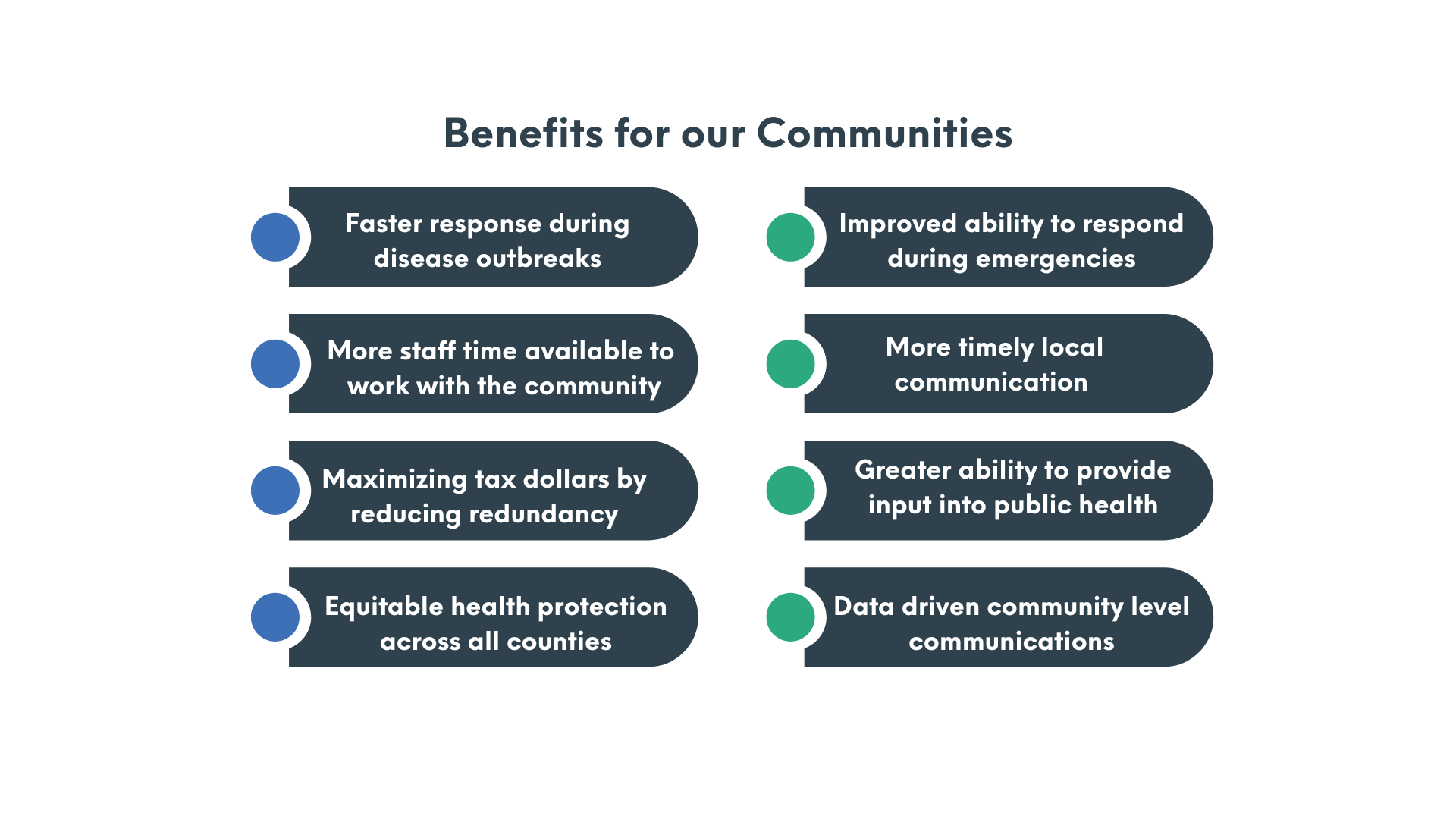
Investing in better communication capacity across all Minnesota health departments means more informed communities, faster response times, and lower healthcare costs in the long run.
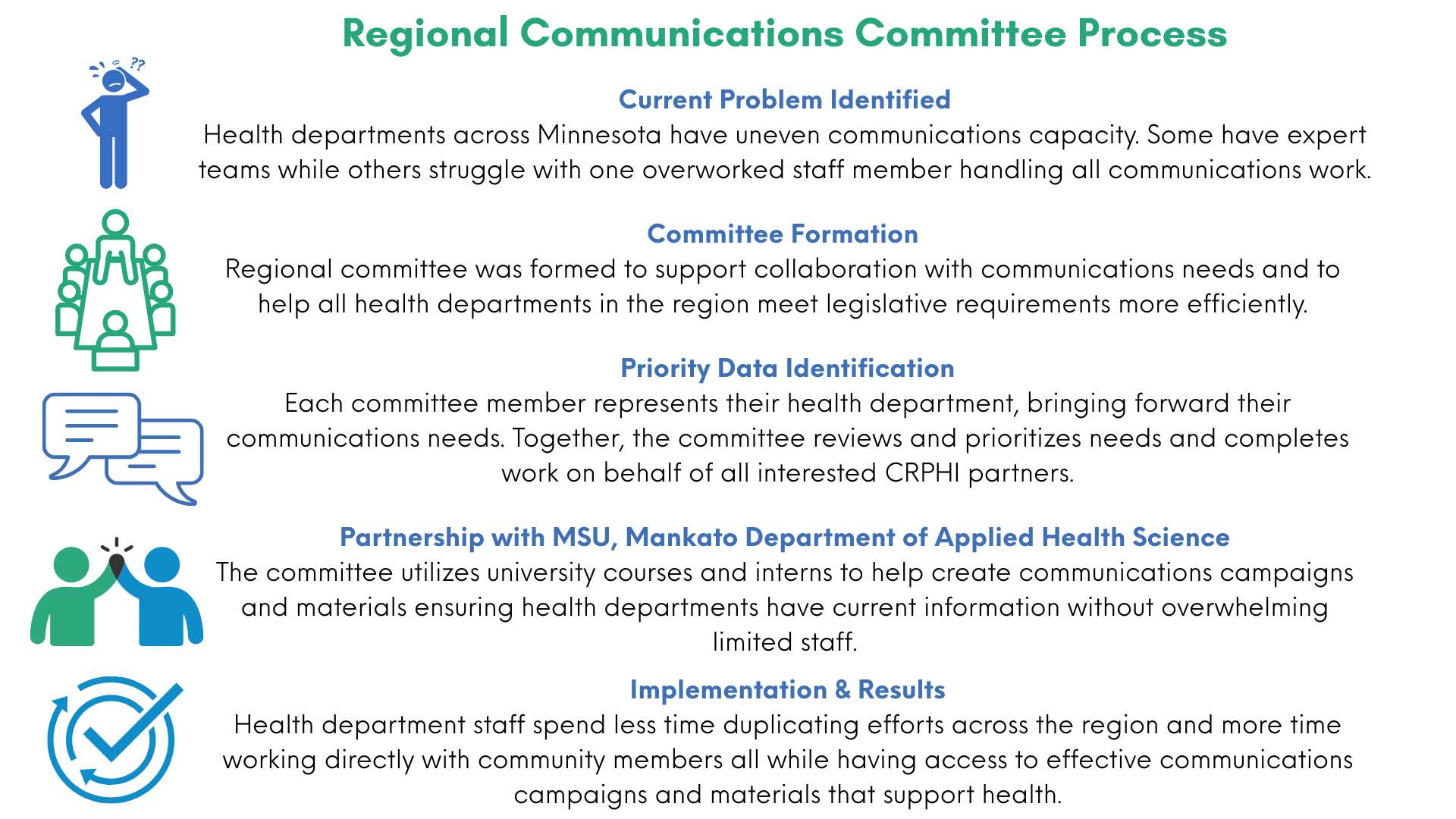
To address the varied communication capacity across our region, CRPHI established the Communications Committee. This group includes representatives from each CRPHI health department who collaborate to strengthen public messaging. By meeting regularly, the committee shares best practices, identifies existing communication tools, and builds skills across departments. We’ve also partnered with Minnesota State University, Mankato, where faculty and students assist with outreach efforts—creating real-world learning opportunities while helping local health departments save time and expand their reach.
Communication Committee Goals
Build Regional Communications Capacity
Instead of each health department creating their own newsletters, websites, and health messages, we want to build a shared communications team that serve multiple counties. This means smaller communities can access professional communications materials, social media content, and health communication specialists that they couldn't afford on their own. When counties work together, they can create high-quality health education materials and reach more people with consistent, trusted messages. Your communities get better health information because these regional teams have the skills and resources to make messages clear, accurate, and engaging.
Identify Infrastructure for Regional Communication Needs
We need to map out what communication tools and systems each health department currently uses to reach their communities - from websites and social media accounts to emergency alert systems and community partnerships. Many departments are using outdated websites or can't effectively reach diverse populations in their area. By identifying what's working and what's missing, we can build a connected network where health departments share resources and coordinate their messaging. This means your communities get health information through the channels they actually use and trust.
Implement Coordinated Communications Campaigns
When health issues affect multiple counties - like flu outbreaks, vaccine drives, or chronic disease prevention - we want all health departments to work together on unified messaging campaigns. Right now, neighboring counties might share completely different information about the same health topic, which confuses residents and reduces the impact of prevention efforts. Coordinated campaigns mean your constituents get consistent, reinforced health messages that are more likely to change behaviors and improve community health outcomes.
Strengthening Emergency Risk Communication
During health emergencies like disease outbreaks, natural disasters, or contaminated water situations, communities need fast, accurate information they can trust. Many health departments struggle to communicate quickly during crises because they lack trained spokespeople, emergency communication plans, or ways to reach vulnerable populations. We want to build regional emergency communication systems, so every community gets timely, clear information during health emergencies. This keeps your communities safer and helps prevent panic or misinformation from spreading.
Enhance Community Engagement and Outreach
Good health communication means more than just posting information - it requires building relationships with community groups, faith organizations, schools, and local businesses to understand what health issues matter most to residents. We want to help health departments develop stronger partnerships with community leaders who can help spread important health messages and gather feedback about what programs people actually need. When health departments have good community connections, your communities get health services and information that address their real concerns and fit their daily lives.

 {{/_source.image}}
{{/_source.showImage}}
{{/_source.image}}
{{/_source.showImage}}